Black Mold Removal in Biloxi, MS
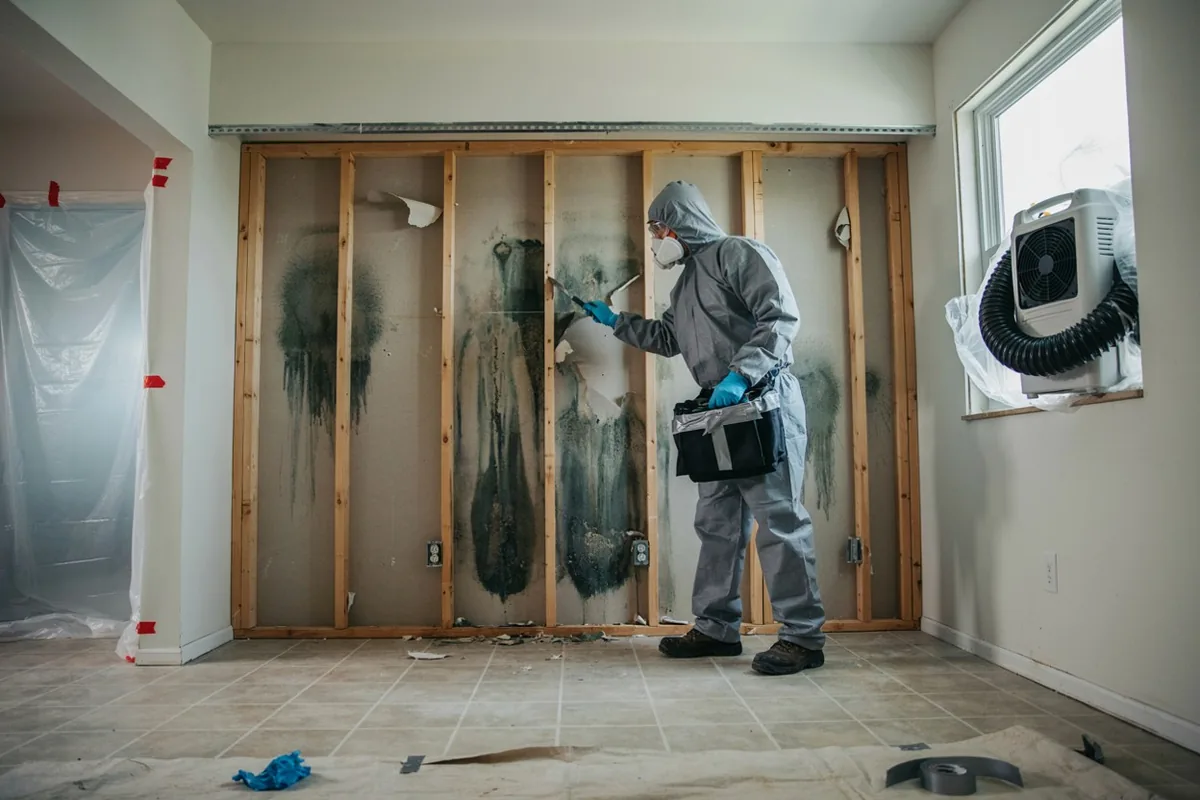
There is a greenish-black patch on the bedroom ceiling that has doubled since the last storm. Or a dark smear along the baseboard behind the couch, or the back wall of the closet has gone from a shadow to something you can see from the door. You searched the color and got scared. Take a breath: CDC says the type of mold doesn’t change what happens next. Call and tell us what you’re looking at. We remove dark mold in Biloxi, D’Iberville, and the eastern Mississippi Gulf Coast the same way we remove every other kind.
Why the color doesn’t change the decision
CDC says it isn’t necessary to identify what kind of mold you have, because all molds should be handled the same way and removed. The mold people call “black mold” grows on drywall, ceiling tile, and paper, and it needs constant moisture — which is why it shows up under a roof drip that ran all summer or behind a wall that never dried after 2005. CDC also says the reported link between that mold and severe illness in infants has not been proven. CDC’s position is that damp, moldy homes can bring on respiratory symptoms. We stick to that and skip the scare tactics.
What matters more than the color
- The presence of a dark patch doesn’t change the basic removal decision — the wet material comes out either way.
- A dark patch that needs constant moisture is telling you the water is still arriving.
- Legitimate guidance talks about the nose, throat, lungs, and skin, not sensational claims.
- Not sure how serious it is? Call and describe the size, the room, and how long it has been there.
Tell Us What You See, 24/7
What the work looks like
Same as any removal, done carefully. The room gets sealed and put under negative pressure. The drywall, ceiling tile, or paper-faced material carrying the growth comes out and gets bagged inside the containment. The framing behind it gets cleaned in place, HEPA-vacuumed, and dried before anything closes up. We find the constant moisture that fed it — the drip, the condensation, the leak — and tell you what has to change. EPA, CDC, and FEMA all say to keep children out of mold cleanup, so keep them out of the room until we’re done.
Biloxi notes
The dark patches we see most here are under roof drips that ran through a whole summer of afternoon storms, on ceilings under a sweating attic duct, and low on walls in houses that were closed up wet after a storm. A house rebuilt fast after 2005 with a room that never smelled right is a common story. If you see growth on drywall, ceilings, or trim, call — the color is the least important thing about it.