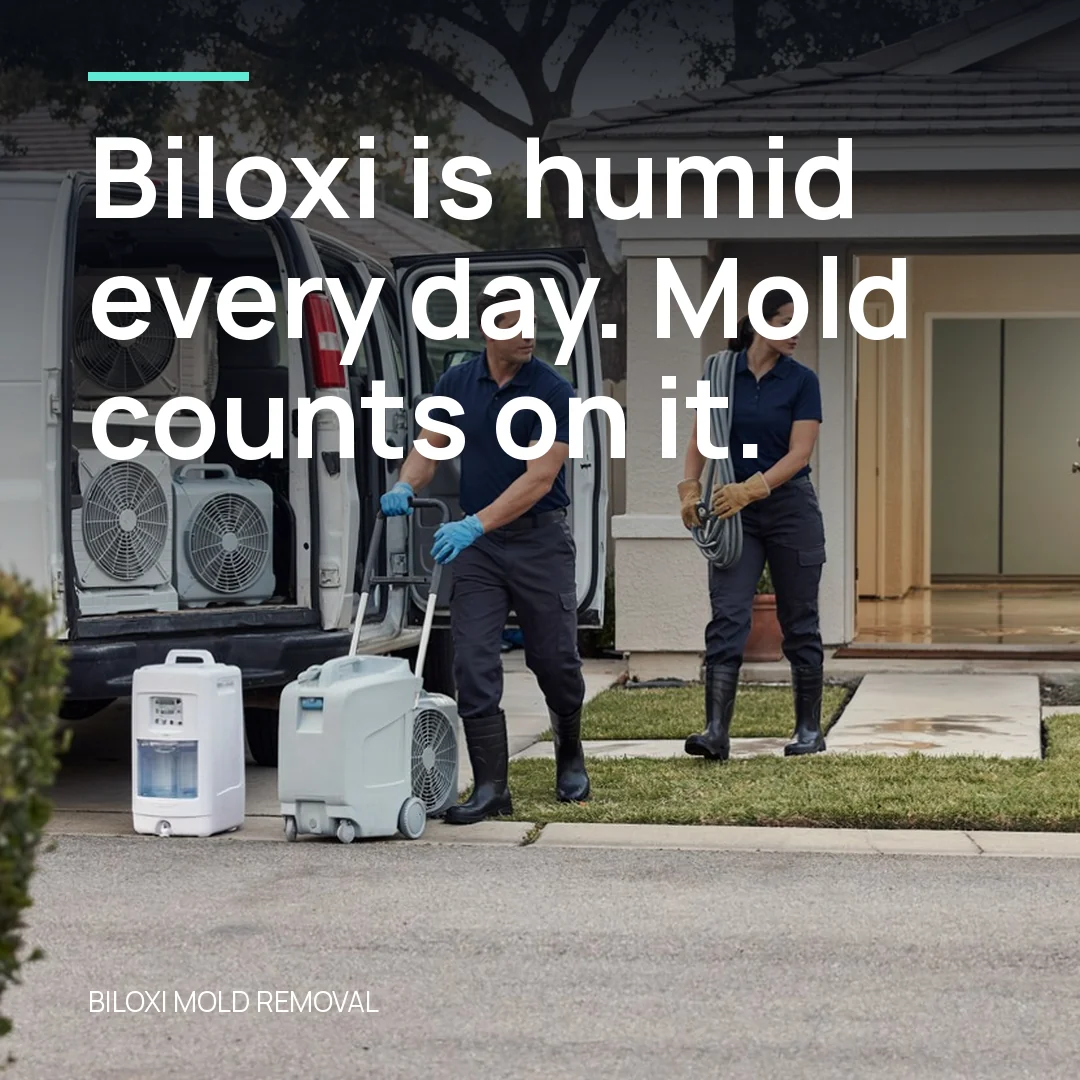
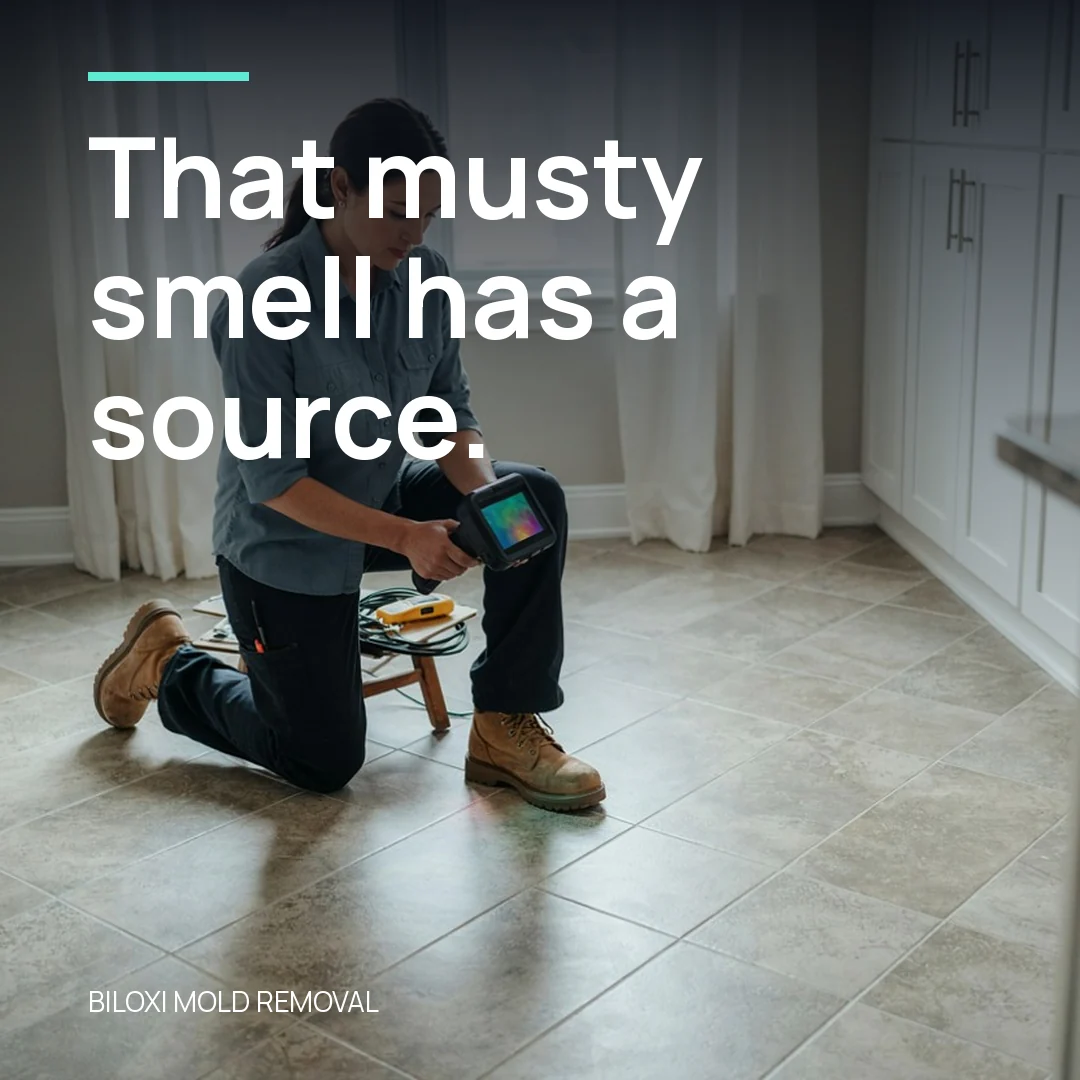
What The Job Looks Like
| What happens |
What it means for you |
| The work area gets sealed in plastic and put under negative pressure |
Spores stay in the room we’re working in instead of drifting down the hall |
| Wet, moldy drywall, insulation, carpet pad, and trim come out; studs, joists, and masonry get cleaned where they stand |
The material that can’t be saved leaves the house; the structure that can stays |
| Everything removed is bagged inside the containment before it moves |
No open bags of moldy drywall carried through your kitchen |
| Cleaned surfaces are HEPA-vacuumed and wiped, and the framing dries before anything is closed up |
Nobody hangs new drywall over damp wood |
| We find where the water came in and tell you what has to change for the removal to hold |
Removal with the same leak still running would just be the same job again next year |
| You get a written report of what came out, from where, and why |
It’s what a buyer will ask to see, and it’s yours to keep |
When DIY Stops Working
You scrubbed the spot on the bathroom ceiling and it came back in three weeks. You painted the corner of the closet and the shadow bled through by fall. That isn’t bad luck. Drywall and ceiling tile are porous — the growth is in the paper facing, not sitting on top of it — and the water that fed it is still arriving. Scrubbing wets the surface again. Paint changes the color for a season.
EPA’s advice is plain: don’t paint or caulk over mold, and don’t count on bleach. Bleach whitens the surface and adds water to material that needed to dry, and dead mold is still an allergen, so killing it isn’t the same as removing it. Porous material that has been wet and moldy generally has to come out. That is the part of the job a spray bottle can’t do.
Why Biloxi Is Its Own Kind Of Wet
Biloxi is a peninsula with water on three sides. Beach Boulevard runs along the Mississippi Sound past the casinos and Keesler; the Back Bay wraps the north side from Point Cadet out to Big Lake; and the Popp’s Ferry and I-110 bridges carry you over to D’Iberville, Cedar Lake, Eagle Point, and the newer subdivisions toward Woolmarket. Camille came ashore at the Hancock–Harrison line in 1969. Katrina put the surge across most of East Biloxi and along the bay in 2005. What got rebuilt afterward is two kinds of house: elevated homes on piers and pilings near the water, and slab houses inland. Both were finished in a hurry, and some rooms never dried right before the drywall went on.
Then there is the ordinary year. The air conditioning runs from March into November, pulling humid Gulf air across cold coils and sweating ducts in an attic that never cools down. Houses on the Back Bay side deal with ground moisture that beachfront slabs don’t. Newer houses in D’Iberville and Woolmarket are built tight, which keeps a slow leak from ever drying out. A house that sat closed for weeks after a storm often smells different when the door opens — that smell is the reason to call.
None of it changes the work. Whether the water came from the Sound, the roof, or a pinhole in a copper line, the wet material comes out and the framing gets cleaned.
Someone In The House Keeps Coughing?
Here is what the health agencies say, without the drama. CDC says exposure to damp and moldy environments may cause a stuffy nose, sore throat, coughing, wheezing, burning eyes, or skin rash — or none of those, depending on the person. Legitimate guidance talks about the nose, throat, lungs, and skin, not about sensational claims, and we stick to that. EPA, CDC, and FEMA agree on one thing: kids stay out of mold cleanup. CDC also says the kind of mold doesn’t matter: all of it gets treated the same way and removed. If someone has had a “cold” since the last wet week, tell us when you call. It changes how we sequence the rooms.
Opened The Beach Place After Labor Day?
A lot of what stands along the Sound and the bay isn’t lived in every week — a condo on Beach Boulevard, a family house on the Back Bay that gets opened for holidays, a place kept for the grandkids in summer. A house that sits shut through a Gulf Coast summer with the thermostat set high holds moisture the way a boat cabin does. EPA says to keep indoor humidity under 60 percent, ideally 30 to 50; a closed-up house in August won’t. Condo or house, the fix starts with a phone call. If you opened the door and found a smell, a film on the furniture, or spots on the ceiling, call and tell us what you saw.
Selling With A Water Story?
Buyers on this coast ask about water — when it came in, where, and what was done about it. A problem you know about now is much easier to handle than a problem the buyer finds during a walkthrough. Removal done and written up is a report in the folder and a short answer to the question; an unresolved stain in the hall closet is a renegotiation. If you’re listing this season or already under contract, say so when you call. It changes what we photograph and what we put in the report.
Call And Describe It.
We answer at any hour. Tell us what you’re seeing or smelling, which room it’s in, what got wet, and when the water first showed up. If we’re free you’ll be talking to us right away; if we’re on a job you’ll get a scheduled callback, and we’ll tell you which number to watch for.
We take calls from Biloxi, D’Iberville, Woolmarket, North Biloxi, West Biloxi, East Biloxi, Back Bay, Cedar Lake, Eagle Point, Point Cadet, and Big Lake. The full list is on the areas page.
See growth on drywall, ceilings, or trim? Call and tell us what you found.